Choosing between a manual vs automatic motorbike Ha Giang Loop is not simply about which bike is easier to ride. Long descents, steep climbs, tight hairpins and changing road surfaces make control more important than convenience alone. A manual bike offers stronger control through gears and engine braking, while an automatic removes clutch and shifting work. With Odyssey, the better choice should always match your real riding experience. This guide explains how both options behave on Ha Giang roads and when each one makes more sense.
Manual or Automatic: Which Is Safer on the Ha Giang Loop?
Manual automatic safety ha giang loop
There is no single bike type that is safer for every rider. Safety depends on how well the rider can control the bike in mountain conditions.
Manual is better suited to experienced manual riders: Riders who already understand clutch control, downshifting and low-speed balance can use the gearbox to manage steep climbs and long descents more effectively.
Automatic reduces the number of controls to manage: Without a clutch or manual gear changes, riders can focus more attention on traffic, corners, road surfaces and positioning.
Familiarity matters more than the specification sheet: A rider who regularly uses an automatic scooter may be safer on a familiar automatic than learning a manual bike immediately before the Loop.
Beginners face a different decision: If you have little real motorbike experience, choosing automatic instead of manual does not remove the risks created by steep roads, blind corners and changing surfaces.
How manual vs automatic motorbike Ha Giang Loop Roads
The differences become clearer once both types of bikes are placed on actual Ha Giang terrain. Descending, climbing and riding over unstable surfaces each require different forms of control.
Long Descents: Manual Bikes Offer Better Engine Braking
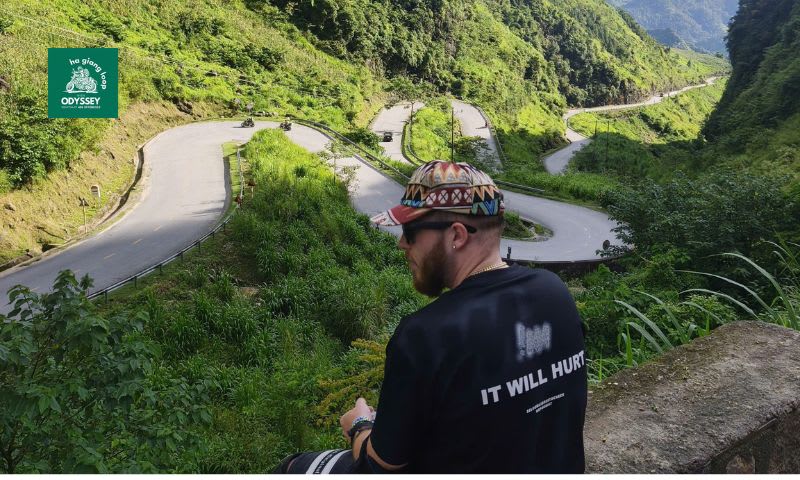
Ha giang long descent winding road
Long mountain descents are one of the main reasons experienced riders often prefer a manual motorbike on the Ha Giang Loop.
Manual bikes allow controlled downshifting: Selecting a lower gear helps the engine resist the bike's speed. This reduces how much the rider needs to rely on the brakes during extended descents.
Automatic scooters depend more heavily on braking: Most automatic scooters provide less rider control over engine braking. Speed therefore needs to be managed more carefully with the front and rear brakes.
Continuous braking can increase brake temperature: Holding the brakes for long sections can reduce braking performance as heat builds up. Riders should brake progressively rather than continuously dragging the brakes downhill.
Engine braking does not replace normal braking: Manual riders still need both brakes. The advantage is that gears provide an additional way to control speed before entering corners or steeper sections.
This difference becomes particularly useful on mountain passes where downhill sections continue through several consecutive bends.
Steep Climbs and Hairpin Turns Require More Than Engine Power
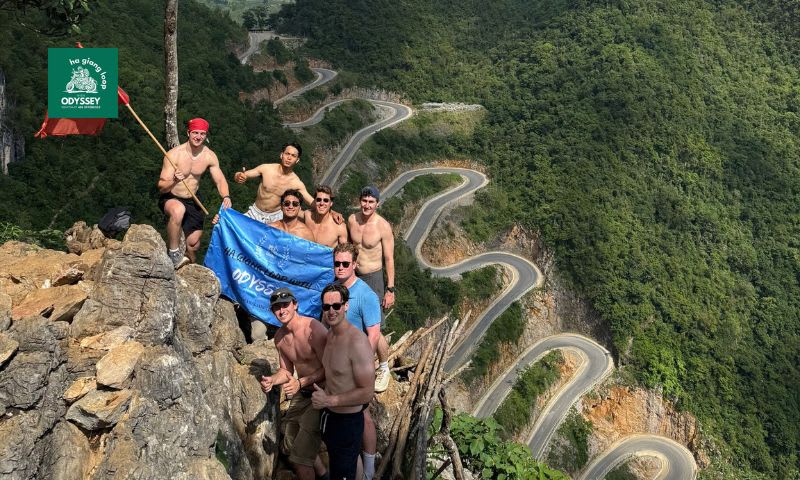
Ha giang hairpin turns steep climb
Ha Giang has many climbs where riders must maintain momentum while preparing for tight bends. Gear control can make these sections easier when the rider understands how to use it.
Manual bikes allow riders to choose the required gear: A lower gear can keep the engine within a useful power range when climbing steep roads or accelerating out of a slow hairpin.
Automatic scooters manage transmission changes for the rider: This makes operation simpler, although the rider has less direct control over how power is delivered at a specific moment.
Passenger weight and luggage affect climbing performance: A bike carrying two people and bags requires more effort on steep gradients than the same bike with one lightly loaded rider.
Poor clutch control removes the manual advantage: Riders unfamiliar with manual bikes can stall, select the wrong gear or struggle with uphill starts. In that situation, technical capability does not translate into safer riding.
A manual bike therefore works best when changing gears and controlling the clutch are already natural actions for the rider.
Broken Asphalt, Gravel and Wet Roads Change the Situation
Ha giang gravel dirt road conditions
Not every section of the Ha Giang Loop provides the same road surface. Roadworks, loose material and rain can quickly change how a bike responds.
Loose gravel reduces available grip: Sudden braking, aggressive steering or abrupt throttle changes can make either type of bike unstable. Smooth inputs become more important than transmission choice.
Manual bikes provide more control over power delivery: Experienced riders can select a suitable gear and keep throttle response predictable when moving slowly across uneven sections.
Automatic scooters can be easier at low mental workload: The rider does not need to coordinate clutch and gear changes while simultaneously choosing a safe line around potholes or loose material.
Wet roads require more conservative riding: Braking distances increase and painted surfaces, mud or loose debris can become slippery. Both manual and automatic riders need to reduce speed before entering corners.
The transmission can help, but tyre condition, braking technique and rider judgement still have a larger influence on control.
Rider Workload Can Change Which Bike Is Safer
Manual motorbikes provide additional control, but additional control also means additional tasks. This distinction becomes important for riders with limited experience.
Experienced manual riders shift without much conscious effort: Clutch, gear, throttle and braking coordination becomes familiar, allowing them to concentrate on road conditions instead of basic controls.
New manual riders have more tasks to process: Approaching a hairpin may involve braking, downshifting, operating the clutch, choosing a line and watching oncoming traffic at the same time.
Automatic bikes simplify corner preparation: Riders mainly manage throttle, brakes and steering. Removing clutch and gear decisions can reduce workload for someone already experienced with scooters.
Simple controls do not make difficult roads simple: An automatic scooter still requires correct braking, cornering and speed management. The Ha Giang Loop remains mountain riding regardless of transmission type.
The key question is not which bike has more controls, but whether the rider can operate those controls confidently without losing attention to the road.
See more: Yen Minh Town
Choose the Bike Based on Your Actual Riding Experience
Your previous riding experience provides a more useful answer than simply comparing manual and automatic specifications. Consider what you regularly ride before choosing a rental bike.
You regularly ride manual motorcycles: A manual bike is usually the natural choice. Familiar gear control allows you to take advantage of engine braking and select gears appropriately on climbs.
You regularly ride automatic scooters: Staying with a familiar automatic can reduce unnecessary workload. However, you need to understand downhill braking and avoid relying on the brakes continuously.
You ride motorbikes only occasionally: City riding experience does not automatically prepare you for repeated mountain passes. Consider how comfortable you are with slow turns, steep gradients and several hours of riding.
You have never ridden independently: The Ha Giang Loop is not an ideal place to learn basic motorbike control. Choosing an Easy Rider allows you to experience the same route without managing the bike yourself.
Changing from manual to automatic should not be treated as a shortcut that makes inexperienced self-riding safe.
Is a Semi-Automatic Bike a Better Middle Option?
Semi-automatic bikes sit between manual motorcycles and fully automatic scooters. They can suit riders who want gear control without operating a hand clutch.
You still select the gears: The rider can change into a lower gear before a climb or descent, providing more direct control than a conventional automatic scooter.
There is no hand-operated clutch: Removing clutch operation makes starting, stopping and slow-speed riding simpler for riders who are not comfortable with full manual motorcycles.
Engine braking remains useful: Lower gears can help control speed on descents, reducing the need to depend entirely on the brakes.
Experience is still necessary: A semi-automatic bike requires correct gear - selection, braking and balance. It should not be considered a replacement for basic riding ability.
For riders familiar with scooters but comfortable changing gears, a semi-automatic can provide a practical compromise between simplicity and downhill control.
Check the Motorbike Before Starting the Ha Giang Loop
The condition of the bike can matter as much as the type of transmission. A poorly maintained manual or automatic motorbike can create unnecessary problems on mountain roads.
Test both brakes: Confirm that front and rear brakes respond progressively without excessive lever travel, unusual noises or weak braking force.
Inspect the tyres: Look for sufficient tread, visible damage and appropriate tyre pressure. Grip becomes particularly important on wet roads and loose surfaces.
Check controls before leaving Ha Giang City: Test the throttle, lights, horn and indicators. Manual riders should also confirm that the clutch and gears operate smoothly.
Take a short test ride: Make sure you can start, stop, make slow turns and control the bike comfortably before beginning longer mountain sections.
Confirm your licence and insurance conditions: Requirements may depend on the motorbike you use and your licence. Travellers should verify that their documents and travel insurance cover the intended vehicle and riding activity.
Do not accept a bike simply because the engine starts. Basic checks before departure can identify problems that become much harder to manage once you are on the Loop.
manual vs automatic motorbike Ha Giang Loop: What Should You Choose?
When deciding between a manual vs automatic motorbike Ha Giang Loop, safety and control are key. While an automatic scooter offers convenience for beginners, steep mountain passes demand the engine-braking power and durability of a semi-automatic or manual bike. For a safe, thrilling, and worry-free ride across Ha Giang, a manual or semi-automatic motorbike is the definitive choice. If you aren't confident shifting gears, booking an Easy Rider is your safest bet.
Experience the Nho Que river boat Ha Giang loop tour through Tu San Canyon. Complete guide to ticket prices, boat wharfs, motorbiking routes, and tips!
Discover the best viewpoints and ride timing for a Ma Pi Leng Pass Ha Giang Loop tour, including Sky Path, Nho Que River, weather, ride duration and Easy Rider options.
Visit Lung Cu Flag Tower Ha Giang Loop: Vietnam’s northernmost point with panoramic views. Get essential travel tips, motorbiking routes, and ticket info!