How to Do the Ha Giang Loop Without Rushing: Daily Riding Time Explained
Plan a Ha Giang Loop itinerary without rushing with realistic daily riding times, a relaxed 4-day route, key stops, and tips to avoid an overly packed schedule.
A good Ha Giang Loop itinerary without rushing is not simply about riding fewer kilometres each day. Mountain roads, viewpoints, lunch stops, changing weather and local activities can turn a relatively short distance into a full travel day. At Odyssey, the focus is on giving travelers enough time to enjoy the landscape instead of moving quickly from one overnight stop to another. This guide explains how much riding time to expect each day and why a four-day Loop often creates a more balanced and relaxed experience.
A 4-Day Ha Giang Loop Itinerary Without Rushing
Four days gives you more room to separate riding time from sightseeing time.
On many sections of the Loop, you may spend around 4–5 hours actually riding, but the full day can still run from morning until late afternoon because of viewpoints, meals, activities and rest stops.
The key is not to fill every hour.
A relaxed itinerary leaves enough space for unexpected delays and spontaneous stops.
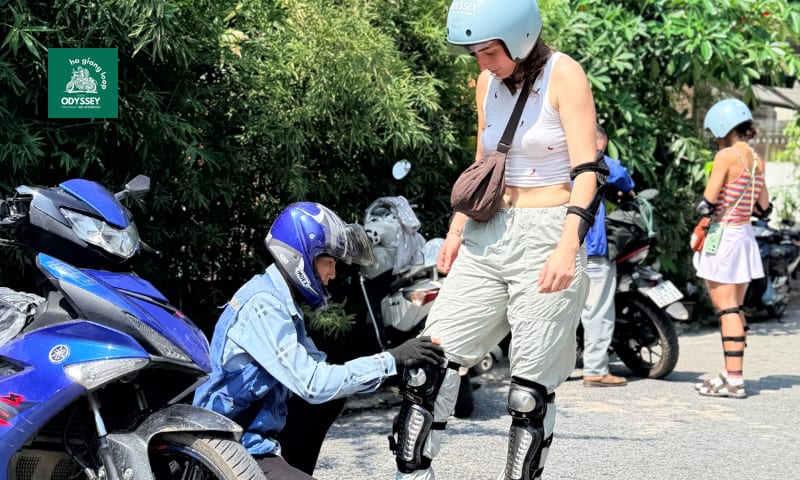
Relaxed Ha Giang Loop itinerary through mountain roads
Day 1 – Ha Giang to Yen Minh: Around 4–5 Hours of Riding
The first day should help you settle into the mountain roads rather than immediately pushing deep into the Loop.
The route from Ha Giang to Yen Minh is roughly 100 kilometres depending on the exact road and stops.
A realistic day may include:
Around 4–5 hours of riding: Mountain roads have frequent bends and climbs, so average speeds are much lower than on highways.
Several viewpoint stops: Quan Ba Heaven Gate, valleys and roadside viewpoints can easily add another hour or more.
A proper lunch break: Sitting down for lunch helps keep the first day comfortable.
Time to adjust to the bike: Even passengers can feel tired after several hours on winding roads.
An early enough arrival: Reaching Yen Minh before late afternoon leaves time to check in and rest.
Trying to continue directly to Dong Van may save an overnight stop, but it also removes much of the flexibility that makes the Loop enjoyable.
Day 2 – Yen Minh to Dong Van: Shorter Distance, More Stops
The second day may look short on a map, but it is one of the most sightseeing-heavy sections of the journey.
The route passes through dramatic karst scenery, mountain passes and villages where stopping is part of the experience.
Expect the day to include:
Around 3–5 hours of actual riding.
Tham Ma Pass: A classic stop where most travelers spend time taking photos.
Karst Plateau scenery: The landscape changes noticeably as you approach Dong Van.
Village and cultural stops: Even short visits can add 30–60 minutes.
Lung Cu detour if included: This adds both distance and sightseeing time.
The mistake is trying to squeeze too much into the same day.
If you also push through Ma Pi Leng Pass in the afternoon, Dong Van can become little more than a transit stop.
A slower itinerary allows you to arrive with enough time to walk around town, have dinner and enjoy the evening.
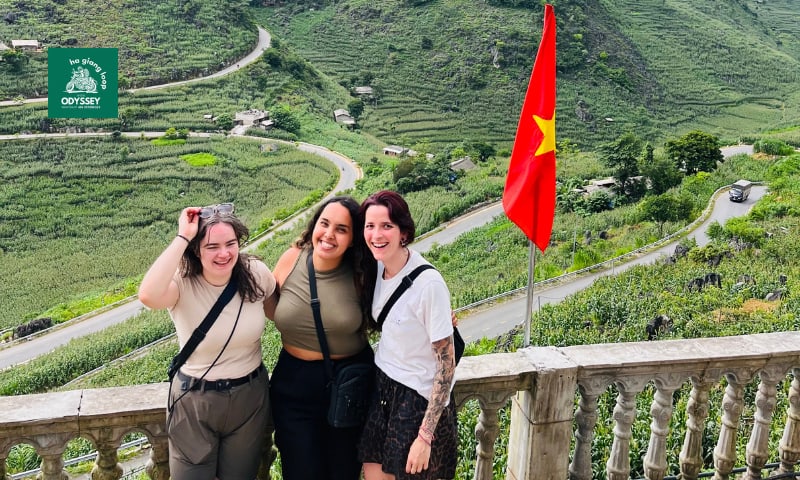
Ha Giang to Yen Minh scenic riding route
Day 3 – Dong Van, Ma Pi Leng and the Nho Que River
Day three is often one of the highlights of the entire Loop.
The road from Dong Van toward Meo Vac crosses Ma Pi Leng Pass, one of the most dramatic mountain sections in northern Vietnam.
A relaxed day should leave room for:
Ma Pi Leng viewpoints: Some stops may take only ten minutes, while others are worth much longer.
Nho Que River: Reaching the river, taking a boat trip and returning to the road can take several hours.
Lunch around Meo Vac: This creates a natural break in the middle of the day.
A slower afternoon section: Roads toward Du Gia can become narrower and more variable.
Extra time for photography: Weather and light often change quickly in this area.
Actual riding time may still be around four or five hours.
However, the full travel day can easily last seven or eight hours because much of the time is spent off the bike.
That does not mean the schedule is rushed.
It means the day is being used for sightseeing rather than continuous riding.
Day 4 – Du Gia or Meo Vac Back to Ha Giang
The final day is where travelers often create unnecessary pressure.
If you have a bus or onward transfer waiting in Ha Giang, it can be tempting to plan the return too tightly.
A better approach is to leave several hours of flexibility.
Depending on the route, expect:
Around 4–5 hours of riding.
Regular rest stops: Fatigue becomes more noticeable after several consecutive riding days.
A proper lunch break: Skipping meals to save time usually makes the final section harder.
A weather buffer: Fog, rain or roadworks can slow the route.
Enough margin before onward transport: Avoid planning a bus only minutes after your expected arrival.
The goal should be to return to Ha Giang with time remaining.
A relaxed final day also lets you enjoy the last sections of the route instead of treating them as a simple transfer back to town.
Yen Minh to Dong Van with scenic and cultural stops
Why 4–5 Hours of Riding Can Still Feel Like a Full Day
When travelers hear that a day includes four hours of riding, they sometimes assume the itinerary will feel short.
In Ha Giang, riding time and total travel time are very different.
Viewpoint Stops Take Time
A single scenic stop may last 15–30 minutes once everyone:
parks;
takes photographs;
walks around;
rests;
prepares to continue.
Several stops can easily add two hours to the day.
Lunch Breaks Matter
A proper lunch can take around an hour.
This becomes part of the travel experience rather than something to rush through.
Activities Happen Off the Bike
Some experiences do not count toward riding time at all.
These may include:
Boat trips.
Village visits.
Markets.
Walking viewpoints.
Café stops.
Weather Changes the Schedule
Rain, fog and low visibility can reduce riding speed or require additional waiting time.
Mountain conditions can change quickly.
Mountain Roads Are More Tiring
Four hours on winding mountain roads can feel very different from four hours on a straight highway.
Constant:
bends;
climbs;
descents;
braking;
concentration
make the journey physically and mentally more demanding.
This is why a day with only four hours in the saddle can still feel complete.
What Makes a Ha Giang Loop Itinerary Feel Rushed?
A rushed Loop is usually caused by scheduling decisions rather than the route itself.
Several common mistakes create unnecessary pressure.
Trying to Cover Too Much Distance
Combining too many major highlights in one day leaves little room for scenic stops.
For example, trying to fit Dong Van, Ma Pi Leng, Nho Que River and a long transfer into one day can turn the itinerary into a race.
Trusting Map Estimates Too Much
Navigation apps mainly calculate movement time.
They do not account properly for:
viewpoints;
lunch;
photography;
weather;
group stops;
unexpected delays.
Mountain roads often take longer than they appear on a map.
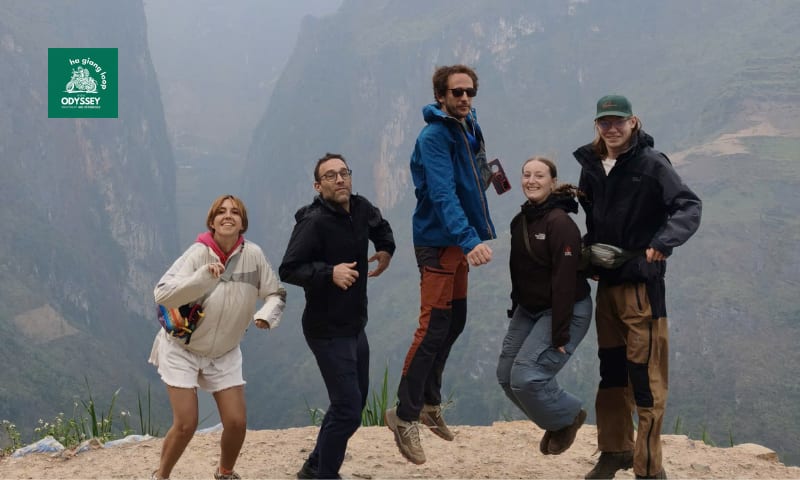
Ma Pi Leng Pass and Nho Que River on a relaxed Ha Giang Loop trip
Leaving Too Late
A late departure can push difficult road sections toward sunset.
Starting earlier gives you more flexibility without requiring faster riding.
Adding Too Many Attractions
More stops do not automatically create a better trip.
Every additional detour reduces time somewhere else.
Choose the places that matter most rather than trying to include everything.
Booking Onward Transport Too Tightly
If your return bus leaves immediately after your expected arrival, even a small delay can create unnecessary stress.
Give yourself a buffer whenever possible.
How Much Riding Time Is Comfortable Each Day?
For many travelers, around 4–5 hours of actual riding per day creates a good balance.
That still leaves enough time for:
Meals.
Scenic stops.
Photography.
Local activities.
Rest.
Weather delays.
However, comfort varies.
Someone accustomed to motorcycles may find five hours manageable, while a first-time passenger may feel tired much earlier.
Your preferred riding time should depend on:
Motorcycle experience.
Whether you self-ride or use an Easy Rider.
Fitness.
Weather.
Road conditions.
Number of consecutive riding days.
A relaxed itinerary is one that still leaves you with energy at the end of the day.
3, 4 or 5 Days – How Much Time Do You Need?
The best trip length depends on how much riding you are comfortable doing each day.
3 Days
A three-day itinerary can still cover many major highlights.
However:
Daily riding sections are usually longer.
Stops need to be more controlled.
There is less flexibility for bad weather.
Some destinations may feel more rushed.
This format works best for travelers with limited time who are comfortable spending longer periods on the road.
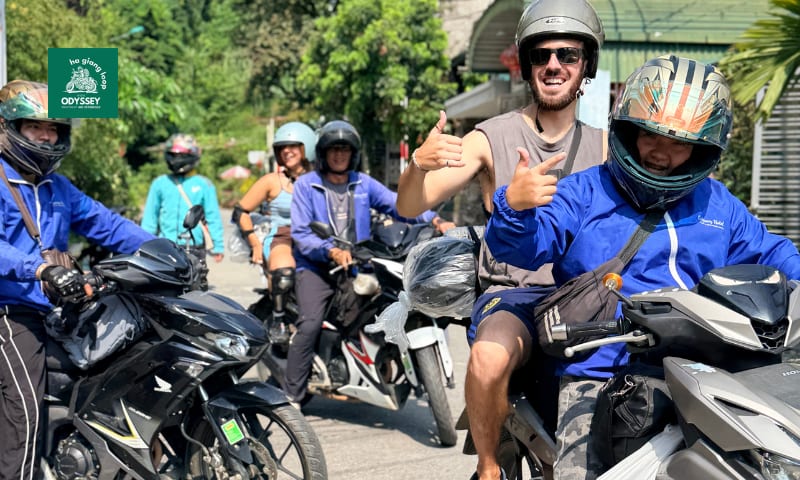
Travelers taking a break during a Ha Giang Loop riding day
4 Days
Four days creates a more balanced rhythm.
Daily riding time can often stay around four to five hours while still leaving enough time for:
Dong Van.
Ma Pi Leng.
Nho Que River.
Viewpoints.
Villages.
Longer breaks.
For many first-time visitors, this is a practical balance between time and pace.
5 Days
Five days works especially well for:
Slow travelers.
Photographers.
Families.
Travelers who want shorter riding days.
Visitors who enjoy longer village stops.
The extra day reduces both distance pressure and the need to rush through major stops.
You can compare Odyssey’s Ha Giang Loop journeys to choose a trip length that better matches your preferred pace.
How to Keep Your Daily Schedule Relaxed
A few simple choices can make a noticeable difference.
Start Early, but Not Exhausted
Leaving after breakfast gives you enough daylight without forcing an extremely early morning.
Choose Fewer Priority Stops
Pick several places that matter most.
This leaves room for unexpected viewpoints along the road.
Take Proper Breaks
Stopping regularly helps reduce fatigue and makes long mountain days more comfortable.
Do Not Skip Meals
Trying to save time by skipping lunch often makes the afternoon harder.
Keep a Buffer
Leave some empty time in the schedule.
That buffer gives you freedom to:
wait for fog to clear;
stay longer at a viewpoint;
handle road delays;
enjoy lunch;
stop when tired.
Flexibility is one of the main differences between a relaxed itinerary and a rushed one.
Comparing daily riding time on 3-day 4-day and 5-day Ha Giang Loop itineraries
Final Thoughts – Ride Less, Experience More
A Ha Giang Loop itinerary without rushing is mainly about managing daily riding time rather than simply reducing the distance.
For many travelers, around 4–5 hours on the bike each day creates enough space for viewpoints, meals, activities and unexpected delays.
Spreading the Loop over four days also makes it easier to enjoy places such as Dong Van, Ma Pi Leng and the Nho Que River without turning them into quick photo stops.
The goal is simple:
Finish each day with enough energy to enjoy where you have arrived instead of spending the entire journey trying to reach the next destination.
Experience the Nho Que river boat Ha Giang loop tour through Tu San Canyon. Complete guide to ticket prices, boat wharfs, motorbiking routes, and tips!
Discover the best viewpoints and ride timing for a Ma Pi Leng Pass Ha Giang Loop tour, including Sky Path, Nho Que River, weather, ride duration and Easy Rider options.
Visit Lung Cu Flag Tower Ha Giang Loop: Vietnam’s northernmost point with panoramic views. Get essential travel tips, motorbiking routes, and ticket info!