Ha Giang Motorbike Tour With a Driver: What an Easy Rider Actually Does
Discover what an Easy Rider does on a Ha Giang motorbike tour with a driver, from handling mountain roads and navigation to passenger support, luggage and daily riding assistance.
A Ha Giang motorbike tour with a driver lets you experience the mountain roads from the back of a motorbike without having to control the bike yourself. However, an Easy Rider does much more than simply transport you from one overnight stop to another. They manage the motorcycle, adapt riding speed to road and weather conditions, follow the planned route and help with practical issues throughout the day. At Odyssey, Easy Rider tours are designed for travelers who want the motorbike experience while leaving the technical riding responsibilities to an experienced local rider.
What Does an Easy Rider Actually Do on a Ha Giang Motorbike Tour?
An Easy Rider is primarily responsible for the motorcycle and for managing each riding section safely and smoothly.
Their role usually covers:
Riding the motorcycle.
Adjusting speed to road conditions.
Following the planned route.
Coordinating stops.
Helping the passenger ride comfortably.
Securing luggage.
Checking basic motorcycle condition.
Providing practical local assistance.
The exact level of guiding and English communication varies between riders and tour formats.
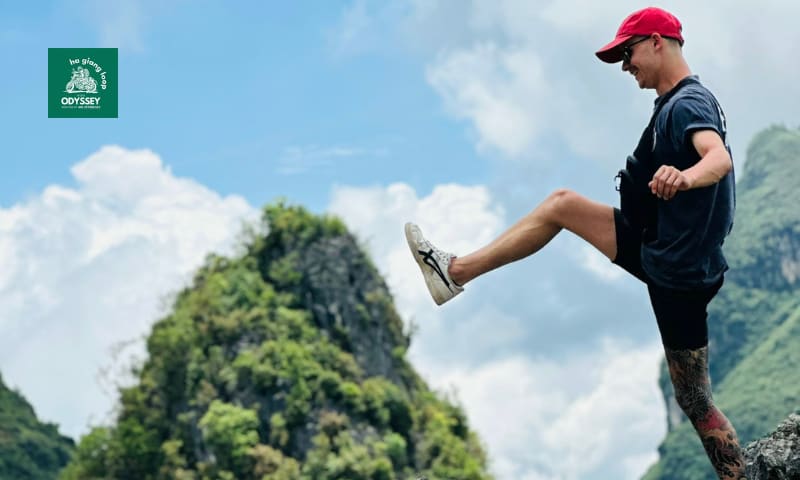
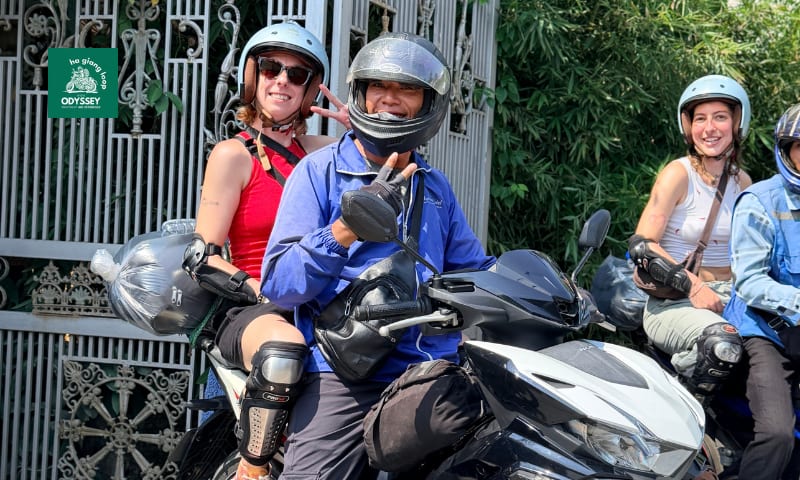
Easy Rider carrying a traveler through the Ha Giang mountains
Drives the Motorbike and Controls the Pace
Mountain riding requires much more than simply knowing how to operate a motorcycle.
Ha Giang roads can include:
Long climbs.
Steep descents.
Tight corners.
Narrow roads.
Changing surfaces.
Fog.
Rain.
Construction zones.
An experienced Easy Rider adjusts the motorcycle to these conditions throughout the day.
Controls Acceleration and Braking
The rider manages speed according to:
Gradient.
Surface condition.
Traffic.
Visibility.
Corners.
Passenger weight.
This becomes especially important on long descents or tight mountain bends.
Passengers do not need to think about:
Gear changes.
Braking technique.
Steering.
Throttle control.
The rider handles those technical tasks.
Chooses an Appropriate Speed
Mountain roads do not have one ideal speed.
An Easy Rider may slow down significantly around:
Blind corners.
Villages.
Wet surfaces.
Loose gravel.
Construction.
Narrow sections.
The objective is not to maintain a constant pace.
It is to ride according to the conditions ahead.
Maintains Space Within the Group
On group tours, motorcycles normally do not ride directly on top of each other.
Keeping enough distance allows riders to:
Brake safely.
Enter corners independently.
Respond to traffic.
Avoid sudden group reactions.
This spacing becomes particularly important on winding roads.
Adapts to Weather
Fog or rain can change the character of the road very quickly.
An experienced rider may:
Reduce speed.
Increase following distance.
Delay a stop.
Change where the group pauses.
Wait for conditions to improve.
The schedule should adapt to the road rather than forcing the road to fit the schedule.
Handles Navigation and Knows Where to Stop
One major advantage of traveling with an Easy Rider is that you are not constantly watching a navigation app.
Local riders are familiar with the route structure and practical stops along the way.
Follows the Planned Tour Route
The rider normally knows the sequence of:
Mountain roads.
Overnight towns.
Viewpoints.
Meal stops.
Fuel stops.
Scheduled attractions.
This reduces the amount of route planning you need to manage yourself.
Finds Fuel and Rest Stops
Fuel availability is not equally convenient on every section of the Loop.
Local riders know where to stop without creating unnecessary detours.
They also understand where the group can pause comfortably for:
Coffee.
Water.
Toilets.
Short rest breaks.
Coordinates With the Tour Leader
On organized group tours, the Easy Rider usually follows the group leader's route.
If riders become separated, the group can coordinate before continuing.
This is especially useful in:
Towns.
Busy viewpoints.
Junctions.
Roadworks. Easy Rider controlling speed on winding mountain roads in Ha Giang
Adjusts Stops When Conditions Change
A viewpoint that looks perfect on the itinerary may be covered by fog when you arrive.
Another stop may become more suitable.
An experienced rider can help adjust the flow of the day while keeping the route moving.
This lets passengers spend more time looking at the landscape instead of worrying about navigation.
Helps You Ride as a Passenger
Being a passenger on mountain roads is different from sitting behind someone during a short city ride.
Your position and movement can affect the motorcycle.
A good Easy Rider helps you understand the basics before the demanding sections begin.
Getting On and Off the Bike
The rider will normally stabilize the motorcycle before you mount or dismount.
Follow their instructions instead of getting on suddenly.
This helps prevent the bike from shifting unexpectedly.
Foot Position
Passenger foot pegs should generally be used throughout the ride.
Keeping your feet in the correct position helps:
Maintain balance.
Avoid moving components.
Keep your legs away from hot parts of the motorcycle.
Cornering
Passengers should normally move naturally with the motorcycle rather than fighting the lean.
Trying to remain completely upright while the bike moves through a bend can make the passenger feel less stable.
Knowing When to Hold More Firmly
Some sections may require a more stable sitting position.
These can include:
Rough roads.
Braking zones.
Steep climbs.
Uneven surfaces.
Most passengers become more comfortable after the first few riding sections.
Good communication between passenger and rider makes the experience easier for both.
Supports Luggage and Practical Tasks
An Easy Rider also manages several small tasks that travelers may not think about when booking.
Secures Your Riding Bag
Motorbike space is limited.
A smaller bag is usually attached securely before departure.
The rider makes sure luggage does not interfere with:
Wheels.
Exhaust.
Passenger position.
Suspension movement.
Large suitcases are generally unsuitable for carrying directly on the motorcycle.
Easy Rider and traveler stopping at a scenic viewpoint on the Ha Giang Loop
Checks the Motorcycle During the Trip
During stops, riders may pay attention to basic issues such as:
Tires.
Brakes.
Chain.
Luggage straps.
Visible mechanical problems.
Small issues are easier to manage before they interrupt the riding day.
Helps at Busy Stops
Large viewpoints can become crowded.
Your rider can help you identify:
Where the motorcycle is parked.
Where the group is meeting.
When everyone is preparing to leave.
This sounds simple, but it becomes useful when several groups are stopping in the same place.
Provides Basic Local Assistance
Easy Riders can often help with simple communication at:
Restaurants.
Homestays.
Fuel stops.
Roadside locations.
The level of English varies, but local familiarity can make many everyday situations easier.
An Easy Rider Is Not Always the Same as a Tour Guide
This is one of the most important distinctions to understand before booking.
An Easy Rider and a tour guide may be the same person on some tours, but not always.
Easy Rider
The rider's main responsibility is normally:
Operating the motorcycle.
Looking after the passenger during riding sections.
Managing road conditions.
Following the route.
Coordinating with the group.
Their attention is naturally focused on the road and the motorcycle.
Tour Guide or Group Leader
A separate guide may have broader responsibilities.
These can include:
Explaining destinations.
Managing the itinerary.
Organizing accommodation.
Coordinating meals.
Communicating schedule changes.
Providing more detailed English-language information.
On smaller tours, one experienced rider may also act as the main guide.
On other tours, these roles are separate.
Before booking, ask whether your Easy Rider is also expected to provide detailed English-language guiding.
Do not assume every rider has the same language ability or guiding role.
Easy Rider helping a passenger prepare for a mountain ride
What Does a Typical Day With an Easy Rider Look Like?
The exact itinerary varies, but most riding days follow a similar pattern.
Morning
The day generally begins with:
Breakfast.
Preparing a small riding bag.
A short route briefing.
Motorcycle checks.
The Easy Rider then secures the luggage and confirms that the passenger is ready.
First Riding Section
The group usually rides for a period before stopping.
Stops may include:
Viewpoints.
Villages.
Cafés.
Attractions.
You do not normally stay on the motorcycle continuously for the entire morning.
Lunch
Lunch provides a longer break.
This is a useful time to:
Rest.
Stretch.
Eat properly.
Prepare for the afternoon section.
Afternoon
Additional riding sections may include stops for:
Fuel.
Drinks.
Photography.
Attractions.
Roadside viewpoints.
Arrival
By late afternoon, the group usually reaches the overnight accommodation.
The rider:
Parks the motorcycle.
Helps release luggage.
Finishes the riding responsibilities for the day.
You should still expect several hours on the motorcycle across the day.
An Easy Rider removes the mental and physical workload of controlling the bike, but you are still sitting as a passenger through the riding sections.
What an Easy Rider Does Not Take Responsibility For
Understanding the limits of the role prevents unrealistic expectations.
Professional English Guiding Is Not Automatic
Some riders speak good English.
Others communicate mainly through:
Basic English.
Simple explanations.
Practical gestures.
A separate guide may provide most detailed destination information.
The Rider Does Not Control the Entire Itinerary
On a group tour, individual Easy Riders generally follow the schedule established by the tour leader or operator.
They cannot independently redesign the entire itinerary for one passenger.
Large Luggage May Not Fit
Motorcycle luggage space is limited.
Travelers are usually expected to bring:
A small backpack.
A compact overnight bag.
Larger luggage may need to be stored or transferred separately.
Easy Rider securing luggage before starting the Ha Giang Loop
The Rider Cannot Remove All Road Risk
Mountain roads can involve:
Rain.
Fog.
Traffic.
Construction.
Changing surfaces.
An experienced rider manages these conditions but cannot make the road completely predictable.
Not Every Requested Stop Is Safe
Passengers may sometimes want to stop immediately for a photograph.
That may not be possible on:
Narrow bends.
Steep gradients.
Busy sections.
Unsafe shoulders.
The rider may continue until there is a safer place to park.
Easy Rider vs Self-Ride: What Changes?
The scenery may be the same, but your responsibilities are very different.
With an Easy Rider
You mainly focus on:
Scenery.
Photography.
Rest.
The travel experience.
The rider handles:
Motorcycle control.
Navigation.
Road conditions.
Daily riding logistics.
When Self-Riding
You need to handle:
Throttle.
Braking.
Gears.
Steering.
Navigation.
Fuel.
Road conditions.
Mechanical problems.
Self-riding offers greater independence but also requires appropriate experience and documentation.
For travelers who do not want that responsibility, an Easy Rider keeps the motorbike experience without requiring them to control the motorcycle.
Who Is a Ha Giang Motorbike Tour With a Driver Best For?
This travel style works particularly well for travelers who:
Want the open-air motorbike experience.
Do not want to self-ride.
Lack mountain-riding experience.
Want help with navigation.
Prefer local route support.
Want to focus on scenery and photography.
It can also suit first-time visitors who want to experience the Loop without turning the journey into a riding challenge.
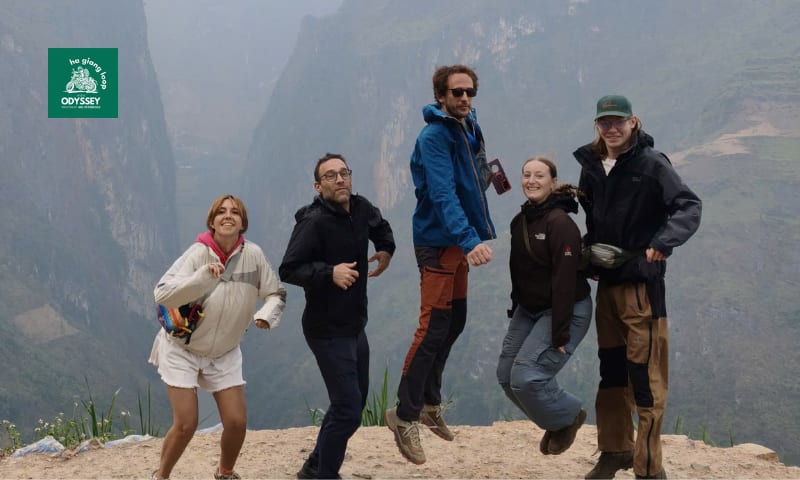
Easy Riders and tour guide traveling together in Ha Giang
What Should You Ask Before Booking?
Before confirming your tour, ask:
Is the Easy Rider also a guide?
Is there a separate English-speaking guide?
What size luggage can I take?
Is riding equipment included?
Are fuel and accommodation included?
What happens if weather changes the route?
How large is the group?
Are private Easy Riders available?
These questions make it easier to understand exactly what you are paying for.
You can compare Odyssey’s Ha Giang Loop journeys to see how different tour formats combine riding support, group size and itinerary structure.
Is a Ha Giang Motorbike Tour With a Driver Right for You?
A Ha Giang motorbike tour with a driver is well suited to travelers who want to experience the Loop by motorcycle but do not want responsibility for controlling the bike, navigating mountain roads or dealing with daily riding logistics.
A good Easy Rider does much more than provide transport.
They help manage:
Riding speed.
Road conditions.
Navigation.
Passenger comfort.
Luggage.
Practical stops.
The daily flow of the journey.
At the same time, it is important to understand the limits of the role.
An Easy Rider is not automatically a professional English-speaking guide and cannot remove every risk or change every part of the itinerary.
The best experience comes from knowing exactly what the service includes before departure.
That way, you can spend more of your Ha Giang journey enjoying the mountains while an experienced rider manages the technical side of traveling by motorbike.
Experience the Nho Que river boat Ha Giang loop tour through Tu San Canyon. Complete guide to ticket prices, boat wharfs, motorbiking routes, and tips!
Discover the best viewpoints and ride timing for a Ma Pi Leng Pass Ha Giang Loop tour, including Sky Path, Nho Que River, weather, ride duration and Easy Rider options.
Visit Lung Cu Flag Tower Ha Giang Loop: Vietnam’s northernmost point with panoramic views. Get essential travel tips, motorbiking routes, and ticket info!