A Ha Giang 3-day tour gives first-time visitors enough time to experience the Loop’s major mountain passes, karst landscapes, river valleys and highland towns without committing four or five days. The challenge is choosing a route that covers the highlights without spending the entire trip rushing between stops. At Odyssey, Ha Giang is best experienced at a pace that leaves time to stop, look around and enjoy the landscape. This guide explains a practical three-day route, what you can realistically see and which places deserve priority.
Is Three Days Enough for a First Ha Giang Tour?
Three days can be enough for a first Ha Giang Loop experience if the itinerary stays focused on the main route.
A well-planned trip can include:
Quan Ba.
Yen Minh.
Dong Van.
Ma Pi Leng Pass.
Nho Que River.
Meo Vac.
Du Gia.
Together, these areas provide a strong introduction to the dramatic northern mountains as well as the greener valleys farther south.
The main limitation is time.
A three-day itinerary does not leave much room for:
Long detours.
Several-hour village visits.
Too many optional attractions.
Extended photography sessions at every viewpoint.
Weather, road conditions and group pace can also affect how much you can realistically include.
For first-time visitors, the best approach is simple: follow the main Loop, spend proper time at the strongest viewpoints and avoid adding stops only because they appear close together on a map.
Four days provides more flexibility, but three days remains practical when your wider Vietnam itinerary is limited.
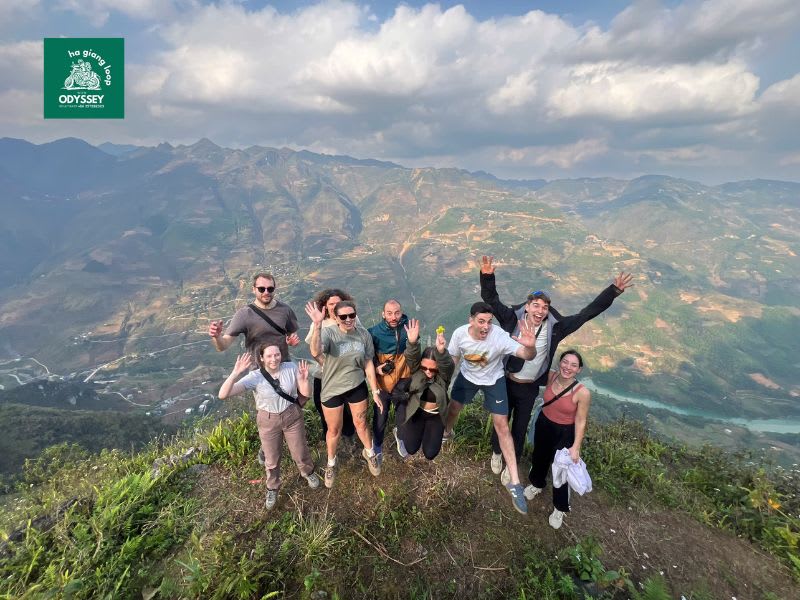
First-time travelers starting a three-day Ha Giang Loop tour
Day 1: Ha Giang City – Quan Ba – Yen Minh – Dong Van
The first day takes you from Ha Giang City into the Dong Van Karst Plateau.
The scenery changes quickly as the road climbs away from the city and enters limestone mountains, valleys and increasingly remote highland areas.
Quan Ba Heaven Gate
Quan Ba Heaven Gate is one of the first major viewpoints on the route.
From the higher sections, you begin to see:
Deep valleys.
Limestone mountains.
Agricultural areas.
Winding mountain roads.
It is a useful first stop because it introduces the scale of the landscape without requiring a long detour.
Quan Ba and Tam Son
The Quan Ba area also provides a natural place to take a break.
For first-time visitors, the opening section of the Loop is a chance to become familiar with:
Mountain riding.
Frequent bends.
Slower travel speeds.
Longer periods on the motorcycle.
There is no need to rush through the first few hours.
Yen Minh
Yen Minh works well as a lunch or rest stop.
After this point, the route begins to feel increasingly remote as farmland gives way to rockier terrain.
Stopping properly for lunch also helps make the long first day more manageable.
Tham Ma Pass
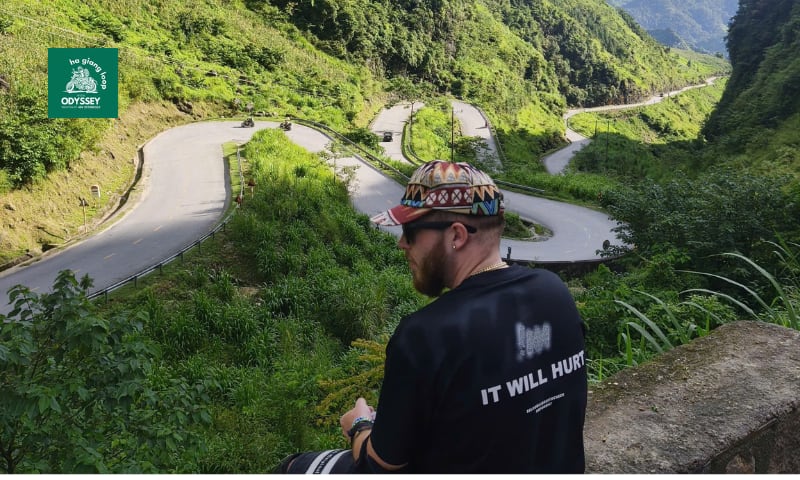
Tham Ma Pass is one of the most recognizable road sections on the northern Loop.
The road climbs through a series of tight bends surrounded by mountains.
Rather than treating it as another five-minute photo stop, spend enough time to:
Walk around.
Photograph the winding road.
Rest.
Enjoy the surrounding landscape.
Dong Van
Dong Van is the practical destination for the first night.
Staying here places you close to Ma Pi Leng Pass for the following morning.
It also gives you somewhere comfortable to:
Eat dinner.
Walk around.
Rest after the longest opening day.
Depending on departure time and overall pace, some itineraries may include the Hmong King’s Palace.
Lung Cu can also be added, but first-time visitors should think carefully before including too many detours on Day 1.
Arriving in Dong Van too late can make the first day unnecessarily tiring.
Day 2: Dong Van – Ma Pi Leng – Nho Que River – Meo Vac – Du Gia
Day two contains some of the most recognizable scenery of the entire Ha Giang Loop.
It is also the day where good time management matters most.
Leaving Dong Van reasonably early gives you more freedom around Ma Pi Leng instead of forcing you to rush through the pass.
Ma Pi Leng Pass
Ma Pi Leng should be one of the highest priorities on a three-day itinerary.
The road runs high above the Nho Que Gorge, with dramatic limestone cliffs and several places where you can stop for wider views.
Do not think of Ma Pi Leng as one single viewpoint.
Different parts of the pass offer:
Mountain layers.
Canyon scenery.
Road photography.
Views toward the river.
This is one area where spending more time creates a noticeably better experience.
Nho Que River
The Nho Que River provides a completely different perspective from the mountain road above.
Depending on timing, weather and access, your itinerary may include a boat trip.
Remember that a river visit can take several hours when you include:
Leaving the main road.
Transfers.
Waiting time.
The boat trip itself.
Returning to the route.
On a three-day itinerary, avoid combining a long Nho Que visit with too many other detours.
Meo Vac
After crossing the Ma Pi Leng area, the route reaches Meo Vac.
This is a useful place for:
Lunch.
Fuel.
Coffee.
A short rest.
After Meo Vac, the atmosphere gradually begins to change.
Mau Due and the Southern Route
As you continue south, the scenery becomes greener.
You begin to see more:
Agricultural valleys.
Smaller villages.
Rural roads.
Softer mountain landscapes.
This contrast is one of the reasons the Loop feels so varied.
Du Gia
The day normally ends in or around Du Gia.
After the exposed limestone landscapes of Dong Van and Ma Pi Leng, Du Gia feels noticeably greener and quieter.
It is a good place to slow down after what is usually the most scenic and demanding day of the trip.
Mountain roads from Quan Ba to Dong Van on the first day
Day 3: Du Gia – Rural Valleys – Lung Tam – Ha Giang City
The final day returns toward Ha Giang City through valleys, villages and rural roads.
It usually contains fewer famous landmarks than Day 2.
That is not a disadvantage.
After two days of dramatic mountain passes, the southern section shows a different side of the region.
Du Gia in the Morning
Starting reasonably early allows time to enjoy the valley before beginning the return journey.
The atmosphere around Du Gia is quieter than around Dong Van and Ma Pi Leng.
There is less pressure to move quickly between major attractions.
Rural Valleys
Much of the appeal on Day 3 comes from the road itself.
Expect scenery such as:
Rice fields.
Small settlements.
Green valleys.
Mountain ridges.
Rural roads.
This is a softer landscape compared with the rocky northern plateau.
Lung Tam
Depending on your route and available time, you may stop around Lung Tam.
The area is associated with traditional Hmong textile production and can add a cultural element to the final riding day.
Do not force this stop into the schedule if road conditions or timing make the day too tight.
Return to Ha Giang City
Where possible, aim to arrive back in Ha Giang during the afternoon rather than immediately before your onward bus.
A buffer gives you time to:
Shower.
Repack luggage.
Eat.
Rest.
Prepare for onward transport.
Rain, roadworks, group pace and photography stops can all change your actual return time.
Avoid booking an excessively tight connection.
What Will You Actually See in Three Days?
A three-day route will not cover every corner of Ha Giang.
What it does provide is a strong range of landscapes within a relatively short trip.
High Mountain Passes
Roads around Quan Ba, Dong Van and Meo Vac offer continuous views of:
Deep valleys.
Limestone peaks.
Steep mountain slopes.
Winding roads.
Dong Van Karst Plateau
The Dong Van area contains some of the Loop’s most distinctive rocky terrain.
It feels very different from the greener landscapes closer to Ha Giang City and Du Gia.
Ma Pi Leng and Nho Que Gorge
These are usually the visual highlights for first-time visitors.
They deserve more time than an ordinary roadside stop.
Highland Towns and Villages
Dong Van, Meo Vac and smaller communities add context to the journey.
The Loop is not only about mountain scenery.
Du Gia and the Southern Valleys
The final section introduces a quieter rural atmosphere before the return to Ha Giang.
You can explore the main Ha Giang Loop destinations before deciding which areas deserve most of your limited time.
Tham Ma Pass and Dong Van Karst Plateau on the Ha Giang Loop
What Do You Sacrifice on a Three-Day Tour?
The main trade-off is depth rather than variety.
You can still see many different landscapes, but you have less time for:
Remote side roads.
Long village visits.
Slow mornings.
Extended cultural stops.
Long photography sessions.
A three-day tour works because the route remains focused.
Trying to turn it into a four- or five-day itinerary compressed into fewer days usually makes the experience worse.
What Should First-Time Visitors Avoid Adding?
The biggest mistake is assuming more stops automatically create a better tour.
Mountain travel does not work like city sightseeing.
Distances can appear short on a map but take considerably longer because of:
Tight bends.
Climbs.
Descents.
Road conditions.
Weather.
Group stops.
Avoid Too Many Detours
Lung Cu, waterfalls, remote villages and additional viewpoints may all sound appealing.
Trying to include everything can turn the trip into constant riding.
Choose priorities.
Do Not Schedule Every Viewpoint
Many of the best places are discovered naturally along the road.
You do not need a named attraction every thirty minutes.
Avoid Late Departures
Starting late removes flexibility from the rest of the day.
This becomes particularly problematic when weather or road conditions slow the group.
Do Not Underestimate Mountain Riding
Several hours on mountain roads can be more tiring than the same amount of time on a straight highway.
Continuous bends and elevation changes require more concentration.
Keep Day 2 Realistic
Ma Pi Leng and Nho Que deserve proper time.
Do not reduce these major highlights to quick stops simply to add several lower-priority attractions.
Ma Pi Leng Pass and Nho Que River during a three-day Ha Giang tour
Easy Rider, Group Tour or Self-Ride for Three Days?
Your travel style also affects how much you can comfortably fit into three days.
Easy Rider
An Easy Rider can be practical for first-time visitors who want to focus on the scenery instead of managing a motorcycle.
The rider handles:
Mountain roads.
Navigation.
Route timing.
Daily riding logistics.
This can make a relatively condensed three-day itinerary feel easier.
Group Tour
A group tour offers:
Planned logistics.
A social environment.
Shared meals and stops.
Lower costs than many private arrangements.
The trade-off is less flexibility because timing must work for the whole group.
Self-Ride
Self-riding provides the most independence but also requires the most responsibility.
You need to manage:
Motorcycle handling.
Navigation.
Fuel.
Mechanical issues.
Road conditions.
Legal riding requirements.
A three-day schedule is already relatively compact, so self-riders should avoid creating additional pressure by overloading the route.
Who Is a 3-Day Ha Giang Tour Best For?
A Ha Giang 3-day tour works particularly well for travelers who:
Have limited time in northern Vietnam.
Want to see the main Loop highlights.
Are comfortable with relatively full riding days.
Prefer a focused route.
Do not need long village stays.
Want a balance of rocky mountains and greener valleys.
It may feel too short if your priorities include:
Slow travel.
Photography.
Longer cultural visits.
Quiet mornings.
Frequent unplanned stops.
In those cases, four days may provide a more relaxed rhythm.
Green valleys and rural roads between Du Gia and Ha Giang
Is a Ha Giang 3-Day Tour Right for You?
A Ha Giang 3-day tour is a practical choice for first-time visitors who want to experience the main parts of the Loop within a limited schedule.
The route through Quan Ba, Dong Van, Ma Pi Leng, Meo Vac and Du Gia provides a balanced mix of:
Mountain passes.
Karst scenery.
River views.
Highland towns.
Rural valleys.
The key is not trying to see everything.
Keep the route focused, leave enough time for Ma Pi Leng and the Nho Que area, and treat viewpoints as places to experience rather than items to complete.
If you prefer spending your three days enjoying the scenery instead of managing navigation and daily logistics, Odyssey offers guided options that let you experience the Loop with local support from departure to return.
Experience the Nho Que river boat Ha Giang loop tour through Tu San Canyon. Complete guide to ticket prices, boat wharfs, motorbiking routes, and tips!
Discover the best viewpoints and ride timing for a Ma Pi Leng Pass Ha Giang Loop tour, including Sky Path, Nho Que River, weather, ride duration and Easy Rider options.
Visit Lung Cu Flag Tower Ha Giang Loop: Vietnam’s northernmost point with panoramic views. Get essential travel tips, motorbiking routes, and ticket info!