Du Gia Waterfall Ha Giang Loop: How to Visit, Swim and Plan Your Stop
Discover Du Gia Waterfall Ha Giang Loop guide: best swimming spots, cliff jumping tips, directions from Meo Vac, and local homestays for an epic road trip!
A Du Gia Waterfall Ha Giang Loop stop gives travellers something different from the mountain passes, viewpoints and long riding sections that define most of the route. Located near Du Gia village, the waterfall is known for its natural pool, cool mountain water and relaxed setting. With Odyssey, the goal is not simply to fit as many places as possible into each day, but to leave enough time to actually enjoy worthwhile stops. This guide explains how to reach Du Gia Waterfall, when to swim, how long to stay and how to fit it comfortably into a three-day or four-day Ha Giang Loop.
How to Visit Du Gia Waterfall on the Ha Giang Loop
Planning a Du Gia Waterfall Ha Giang Loop visit is relatively straightforward, but it helps to understand where the waterfall sits, how much time the stop requires and how local conditions can affect swimming.
Where Is Du Gia Waterfall?
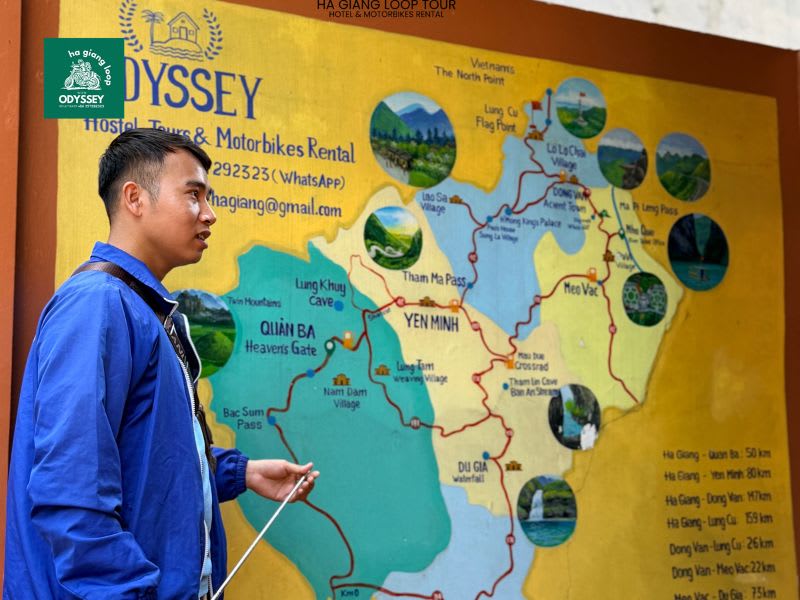
Du Gia Waterfall is located outside Du Gia village, a green valley area on the southern section of the Ha Giang Loop. Du Gia is commonly included near the end of multi-day routes after riders travel through areas such as Dong Van, Ma Pi Leng, Meo Vac and Mau Due.
The waterfall is not directly beside the main road through the village. Travellers normally leave the main route and follow a smaller local road toward the waterfall area. Depending on where you park, the final approach may also involve a short walk.
This means you should treat the waterfall as a planned stop rather than something you can simply photograph from the roadside.
Road conditions on smaller roads around Ha Giang can also change after rainfall. If you are travelling with an Easy Rider or local guide, they can usually judge whether the access route is comfortable that day and adjust the timing accordingly.
du gia waterfall ha giang loop
How Much Time Should You Allow?
For most travellers, around one to two hours is a practical amount of time for Du Gia Waterfall itself.
That gives you enough time to reach the waterfall, change if you plan to swim, spend time in the water, dry off and return to the village without turning the visit into a rushed photo stop.
You may want longer if Du Gia is your overnight destination. In that case, there is less pressure to immediately continue riding after the waterfall.
The main mistake is scheduling the stop too late in a long riding day. Ha Giang travel times are affected by mountain roads, photo stops, traffic, weather and roadworks. A route that looks manageable on a map can take longer than expected.
If you still have several hours of riding ahead, keep the waterfall stop shorter. If you are staying overnight in Du Gia, you can usually approach it at a more relaxed pace.
Can You Swim at Du Gia Waterfall?
Swimming is one of the main reasons travellers include Du Gia Waterfall on the Ha Giang Loop. The waterfall feeds a natural pool where visitors often cool down after riding through the mountains. Vietnam Tourism also highlights the waterfall as a swimming stop, particularly when seasonal rainfall brings stronger flow to the cascade.
However, natural swimming areas are different from managed swimming pools.
Water depth, visibility and current can change after rain. Rocks around the edge may also become extremely slippery. Never assume that conditions are safe simply because other travellers are already swimming.
Avoid jumping from rocks unless you can clearly verify the depth and underwater conditions. Heavy rain upstream can also change water flow quickly, so local advice matters more than photos or videos posted on social media.
If the current looks unusually strong or the water is muddy after recent rain, enjoying the waterfall from the edge is the safer choice.
du gia waterfall ha giang loop 1
Best Time of Day to Visit
Late morning or early afternoon usually works well because you still have good daylight and enough time to continue your itinerary afterward.
However, the best hour depends on where you are sleeping that night.
If Du Gia is your overnight stop, visiting after arriving in the village can be convenient. You can swim, return to your accommodation and avoid putting wet clothing back on for another long mountain ride.
Popular periods can become busier later in the day as tour groups arrive. Local travel guides note that early morning is generally quieter if avoiding crowds is important to you.
Whichever time you choose, avoid reaching the waterfall close to darkness. Smaller roads are easier to navigate in daylight, particularly after rain.
du gia waterfall ha giang loop 2
Best Time of Year for Du Gia Waterfall
The experience changes considerably throughout the year because water levels depend on rainfall. A fuller waterfall may look more impressive, while heavy rain can also make swimming and road access less comfortable.
The wetter months generally produce stronger waterfalls and greener scenery. Local travel information places the most reliable waterfall conditions around the rainy season from May to September, extending into the early dry period in some years. During the driest months, smaller waterfalls in Ha Giang can become noticeably weaker.
That does not mean the wettest day is the best day to visit.
After prolonged or heavy rainfall, the Du Gia Waterfall Ha Giang Loop experience can involve stronger currents, slippery rocks and rougher access roads. Water may also be less clear.
During drier weather, access may be easier and the pool calmer, but the waterfall itself may have less flow.
For this reason, check current conditions rather than planning the stop entirely around a particular month. Your guide, Easy Rider or accommodation in Du Gia will usually have much more relevant information about that day's water and road conditions.
du gia waterfall ha giang loop 3
How Du Gia Fits Into a 3-Day or 4-Day Ha Giang Loop
Whether Du Gia feels relaxing or rushed depends largely on the number of days available. Both three-day and four-day routes can include the waterfall, but they require different priorities.
On a three-day Ha Giang Loop, Du Gia is usually part of a relatively full itinerary. A common route connects Dong Van and Ma Pi Leng with Meo Vac before continuing south toward Du Gia and eventually returning to Ha Giang City. Some three-day routes include Du Gia by reducing time elsewhere or skipping certain northern detours.
In this format, the waterfall works best when Du Gia is already part of your overnight route. Trying to add it as a separate detour to an already crowded day can create unnecessary time pressure.
A four-day Ha Giang Loop provides considerably more flexibility.
The additional day allows travellers to spend more time around major stops such as Dong Van, Lung Cu, Ma Pi Leng and the Nho Que River while still reaching Du Gia without turning every stop into a short photo break. Four-day itineraries also make it easier to swim, explore the village and stay overnight before the return to Ha Giang City.
If Du Gia is an important part of your trip, review the other Ha Giang destinations you want to include before deciding between three and four days.
Your riding format matters as well. Easy Rider and guided journeys reduce the need to spend time navigating minor roads or constantly checking the schedule. Self-riders have more independence, but should allow extra time for navigation, fuel stops and changing road conditions.
The objective should not be to fit Du Gia into the itinerary at any cost. It should be to place it where the stop naturally fits the day's route.
What to Bring for a Du Gia Waterfall Stop
You do not need special equipment for a Du Gia Waterfall Ha Giang Loop visit, but a few simple items make the stop more comfortable.
Swimwear or quick-drying clothing: Wear something that can dry quickly if you need to get back on the motorbike later the same day.
Small towel: A lightweight travel towel takes little luggage space and is easier to pack on a motorbike than a full-size towel.
Footwear with good grip: Wet rocks can be slippery, so footwear with traction is more useful than smooth sandals.
Waterproof protection: Keep your phone, wallet, passport and electronics in a waterproof pouch or dry bag before approaching the pool.
Water and cash: Carry drinking water and some Vietnamese dong for small purchases, parking or local expenses where card payment may not be practical.
Keep luggage simple. Most travellers only need what they will actually use during the hour or two spent around the waterfall.
If your main bag is strapped to the motorbike, taking a small day bag makes it easier to keep valuables with you.
du gia waterfall ha giang loop 4
Is Du Gia Waterfall Worth Adding to Your Ha Giang Loop?
Yes, especially if Du Gia is already part of your route. The waterfall gives you a short break from riding and a chance to swim, cool down and relax before continuing the journey.
It works best when road and weather conditions are good and your schedule is not too tight. A four-day itinerary usually gives you more flexibility, while a three-day route requires better time management.
If heavy rain, poor access or a late arrival makes the stop inconvenient, it is reasonable to skip it. A Du Gia Waterfall Ha Giang Loop stop is worth adding when it fits naturally into your itinerary rather than making the day feel rushed.
Experience the Nho Que river boat Ha Giang loop tour through Tu San Canyon. Complete guide to ticket prices, boat wharfs, motorbiking routes, and tips!
Discover the best viewpoints and ride timing for a Ma Pi Leng Pass Ha Giang Loop tour, including Sky Path, Nho Que River, weather, ride duration and Easy Rider options.
Visit Lung Cu Flag Tower Ha Giang Loop: Vietnam’s northernmost point with panoramic views. Get essential travel tips, motorbiking routes, and ticket info!