Best time to do the Ha Giang Loop: Month-by-Month Weather Guide
Discover the best time to do the Ha Giang Loop with a month-by-month weather guide covering temperatures, rain, rice season, flowers and ideal riding conditions.
The best time to do the Ha Giang Loop depends on the kind of scenery and riding conditions you want. Some travelers prefer mild temperatures and clearer mountain views, while others are drawn to green valleys, golden rice fields or seasonal flowers. Conditions can also change quickly between lower valleys and higher areas such as Dong Van and Ma Pi Leng. At Odyssey, the Loop is best approached with enough flexibility for scenic stops and changing mountain weather. This month-by-month guide explains what to expect throughout the year so you can choose a season that suits your travel style.
When Is the Best Time to Do the Ha Giang Loop?
For many travelers, March to April and October to November offer a good balance of comfortable temperatures, attractive scenery and relatively manageable riding conditions.
However, there is no single perfect month.
Ha Giang changes considerably throughout the year.
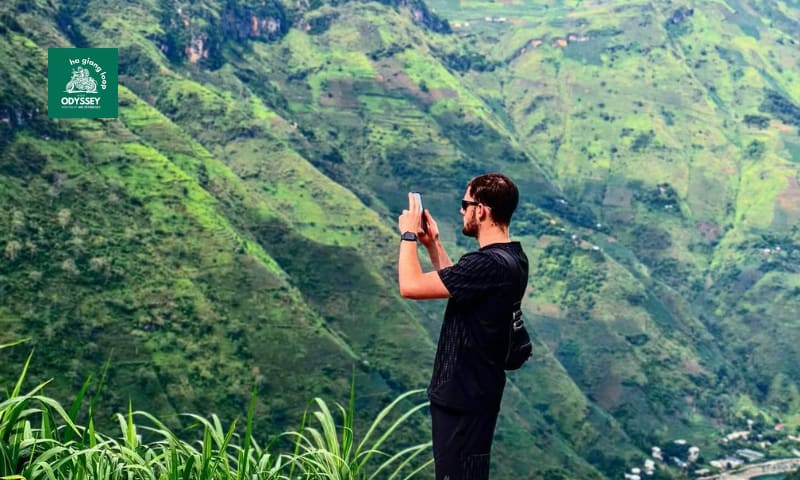
Seasonal mountain scenery on the Ha Giang Loop
March to April
Spring brings milder weather and increasingly green landscapes.
These months can suit travelers who want:
Comfortable daytime temperatures.
Seasonal flowers.
Less intense rainfall than midsummer.
Good conditions for scenic stops.
May to August
Summer produces some of the greenest scenery of the year.
The trade-off is more frequent rain.
Travelers should expect:
Lush valleys.
Stronger waterfalls.
Higher humidity.
Wet roads.
More changeable visibility.
September to November
Autumn combines cooler weather with some of the most varied seasonal scenery.
Depending on the month and location, you may see:
Green-to-golden rice fields.
Harvest landscapes.
Buckwheat flowers.
Clearer mountain air.
December to February
Winter is colder, particularly around higher areas such as Dong Van and Meo Vac.
These months can suit travelers who enjoy:
Cooler temperatures.
Quieter mountain roads.
Atmospheric fog.
Drier periods.
Warm clothing becomes much more important.
Mountain weather is never completely predictable, even during generally favorable periods.
Ha Giang Loop Weather Month by Month
Each month offers a different version of the Loop.
The right choice depends on how you balance:
Temperature.
Rainfall.
Visibility.
Seasonal scenery.
Your comfort on mountain roads.
January – Cold, Dry and Quiet
January is one of the colder months in Ha Giang.
Higher areas around Dong Van, Meo Vac and Ma Pi Leng can feel particularly cold in the early morning and evening.
Wind exposure on a motorcycle makes temperatures feel even lower.
What to Expect
Cold mornings.
Cooler daytime temperatures.
Relatively lower rainfall than summer.
Possible fog.
Quieter travel conditions.
January works best for travelers who are comfortable with cold weather.
Warm layers, gloves and wind protection are important.
Spring flowers and green valleys in Ha Giang
February – Cool Weather and Early Spring
February remains cool, but the landscape gradually begins moving toward spring.
Peach, plum and other seasonal blossoms may start appearing across valleys and villages.
Flowering dates vary each year, so they should not be treated as fixed.
Why February Can Be Interesting
You may experience:
Spring blossoms.
Cool riding temperatures.
Quieter mountain areas.
Atmospheric fog.
Mornings can still feel cold, particularly at higher elevations.
A jacket remains useful even if daytime temperatures are comfortable.
March – Spring Scenery and Comfortable Riding
March is one of the strongest months for travelers who want moderate weather.
Temperatures become milder while the heavier summer rain has not yet arrived.
Valleys begin becoming greener and some spring flowers may still be visible.
March Works Well For
First-time visitors.
Travelers who dislike extreme heat.
Scenic riding.
Photography.
Spring landscapes.
A light jacket is still useful for early starts and higher passes.
April – Warmer Days Before the Wet Season
April brings warmer daytime conditions.
Vegetation becomes noticeably greener around places such as:
Quan Ba.
Yen Minh.
Dong Van.
Rain can occur, but conditions are generally less consistently wet than during the main summer rainy period.
April is a good option for travelers who want warmer weather without the full humidity and rainfall of midsummer.
May – Green Landscapes and Increasing Rain
By May, the mountains become noticeably greener.
Warmer and wetter conditions begin transforming:
Valleys.
Rice fields.
Waterfalls.
Mountain vegetation.
Rain becomes a more important factor in daily planning.
Some showers may pass quickly, while heavier rainfall can make roads slippery.
Travelers should keep rain gear accessible rather than packed deep inside their luggage.
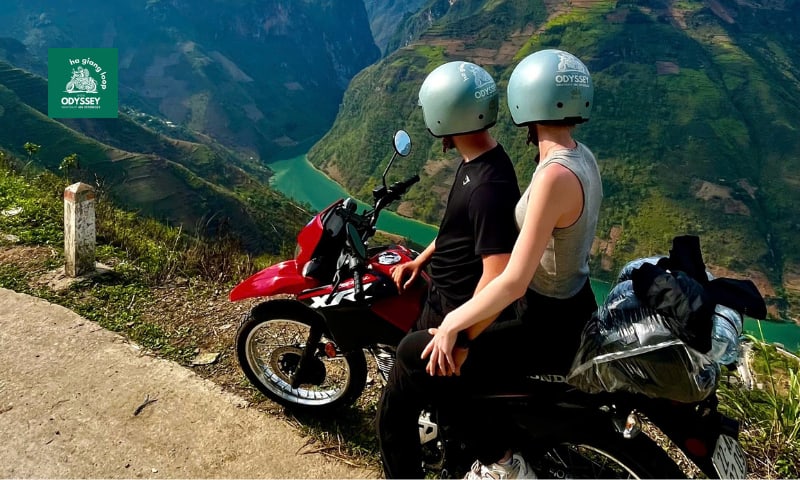
Rainy season riding through lush Ha Giang mountains
June – Warm, Humid and Wet
June usually brings warmer temperatures, higher humidity and more frequent rain.
The major advantage is the scenery.
Ha Giang can look intensely green during this period.
What You May See
Strong waterfalls.
Lush valleys.
Green mountain slopes.
Dramatic cloud formations.
The trade-off is less predictable riding.
Rain, low cloud and reduced visibility may require slower speeds and longer breaks.
Flexibility is more important than following a rigid timetable.
July – Rainy Season Conditions
July sits within the wetter part of the year.
The mountains can be spectacularly green, but heavy rainfall can affect:
Road surfaces.
Visibility.
Travel speed.
Daily route planning.
Some sections may require additional caution after prolonged rain.
A July trip is still possible, but weather needs to be treated as part of the itinerary.
Travelers without mountain-riding experience may find an Easy Rider or guided format more practical during wetter conditions.
August – Green Mountains and Changeable Weather
August continues the summer pattern.
Expect:
Lush vegetation.
Humidity.
Frequent rain.
Rapid weather changes.
A clear morning can become cloudy or wet later in the day.
Self-riders should be comfortable adjusting speed and route timing when roads become wet.
Waterproof covers or dry bags are particularly useful during this period.
September – Green Valleys Meet Harvest Season
September marks the transition from wetter summer conditions toward autumn.
Rain may still occur, especially earlier in the month.
However, some rice-growing areas begin shifting from green toward gold.
Harvest timing varies between locations and from year to year.
September Can Offer
Green mountain scenery.
Early golden rice fields.
Cooler conditions than midsummer.
Transitional seasonal landscapes.
It is a good month for travelers who want both green scenery and the beginning of autumn color.
Golden rice fields and autumn scenery in Ha Giang
October – Cooler Weather and Autumn Scenery
October is one of the most popular periods for visiting Ha Giang.
Temperatures become cooler and the summer rain pattern generally begins easing.
Depending on the exact timing and location, travelers may encounter:
Late rice harvest scenery.
Golden fields.
Early buckwheat flowers.
Cooler mountain air.
The combination of comfortable temperatures and varied scenery makes October attractive for first-time visitors and photographers.
Popular accommodations and tours may also become busier during this period.
November – Buckwheat Flowers and Cool Mountain Air
November is closely associated with Ha Giang's buckwheat flower season.
Fields around Dong Van and surrounding mountain areas may display white and pink flowers.
Exact flowering conditions vary each year.
Do not plan your trip around one specific day.
November Is Especially Good For
Photography.
Seasonal flowers.
Cooler daytime riding.
Mountain landscapes.
Temperatures can drop noticeably after sunset.
Bring enough layers for the evenings and early mornings.
December – Dry, Cold and Atmospheric
December brings colder mountain conditions and shorter daylight hours.
Dry periods can produce excellent visibility.
However, fog and low cloud are still possible.
At higher elevations, early mornings and evenings can feel very cold when riding.
Pack for December With
Warm layers.
Gloves.
Wind protection.
A warmer jacket.
December can work well for travelers who enjoy colder, quieter and more atmospheric mountain scenery.
Choose the Best Month Based on What You Want to See
Instead of choosing your dates based only on temperature, think about the type of scenery you want.
For Comfortable Riding Conditions
Consider:
March.
April.
October.
November.
Temperatures are generally more moderate during these periods.
For Spring Flowers
February and March can bring:
Peach blossoms.
Plum blossoms.
Other seasonal flowers.
The exact timing depends on yearly conditions.
For Lush Green Scenery
May through August generally produces some of the greenest mountain landscapes.
Expect more rainfall in return.
For Rice Landscapes
September into early October can offer attractive harvest scenery in rice-growing areas.
The timing varies by location.
For Buckwheat Flowers
Late September through November is commonly associated with Ha Giang's buckwheat fields.
Flower conditions vary each season.
Buckwheat flowers across the Ha Giang mountains
How Weather Changes Your Ha Giang Loop Experience
Weather affects much more than photographs.
It changes how the road feels.
Rain
Wet roads require more cautious:
Braking.
Cornering.
Speed control.
Heavy rainfall can also affect visibility and road conditions.
Fog
Fog is common around higher passes.
It can dramatically reduce visibility and make scenic viewpoints temporarily disappear.
A flexible itinerary allows you to wait or adjust stops.
Cold
Cold becomes more noticeable when you spend several hours on the motorcycle.
Wind at speed can make temperatures feel lower than expected.
Heat and Humidity
Hot or humid conditions increase the importance of:
Water.
Regular breaks.
Lightweight clothing.
This is why the Loop should not be planned as a race between destinations.
Leave enough time for conditions to change.
What to Pack for Different Seasons
Ha Giang's elevation changes mean you may experience more than one type of weather during the same trip.
Cooler Months
Bring:
Wind-resistant jacket.
Warm layers.
Gloves.
Long trousers.
Layers are useful because temperatures can rise significantly during the day.
Warmer and Wetter Months
Bring:
Lightweight clothing.
Proper rain jacket.
Quick-drying layers.
Waterproof luggage protection.
Keep rain gear somewhere you can access quickly.
Useful Year-Round Items
Consider packing:
Sun protection.
Waterproof phone protection.
Dry bag or backpack cover.
Spare dry clothing.
Mountain weather can change quickly.
What Season Is Best for Photography?
Photography depends on the kind of landscape you want.
Spring
Good for:
Blossoms.
Green valleys.
Softer seasonal scenery.
Summer
Good for:
Intensely green mountains.
Waterfalls.
Dramatic clouds.
The trade-off is more rain.
Autumn
Good for:
Rice fields.
Harvest colors.
Buckwheat flowers.
Cooler mountain light.
Winter
Good for:
Fog.
Atmospheric mountain scenes.
Quieter roads.
The best photography month depends on the style of images you prefer.
Should Rainy Season Stop You From Visiting?
Not necessarily.
Summer rain does not mean it rains continuously every day.
However, you should expect less predictability.
A summer trip works better when you:
Avoid extremely tight schedules.
Carry proper waterproof gear.
Accept slower riding when needed.
Allow route changes.
Travelers who value lush green landscapes may still find the rainy season rewarding.
Match Your Tour Pace to the Season
Your ideal itinerary may also depend on the month.
During wetter periods, extra flexibility can be useful.
During colder months, shorter riding sections or more regular warm-up stops may improve comfort.
During popular autumn months, advance planning may help with accommodation availability.
You can compare Odyssey’s Ha Giang Loop journeys to choose a trip length and travel format that better fits the season you plan to visit.
Best Time to Do the Ha Giang Loop: Plan Around Your Priorities
There is no single best time to do the Ha Giang Loop for every traveler.
March and April are strong choices for spring scenery and comfortable temperatures.
October and November combine cooler weather with autumn landscapes and seasonal flowers.
Cold and foggy winter roads on the Ha Giang Loop
Summer brings intensely green mountains but also more rain.
Winter offers colder and quieter conditions for travelers prepared with warm clothing.
Rather than searching for one guaranteed sunny week, choose the season that matches the scenery and riding conditions you prefer.
Then build enough flexibility into your itinerary for Ha Giang's mountain weather to change.
That approach usually creates a better trip than choosing a month only because it is described as the “best” season.
Experience the Nho Que river boat Ha Giang loop tour through Tu San Canyon. Complete guide to ticket prices, boat wharfs, motorbiking routes, and tips!
Discover the best viewpoints and ride timing for a Ma Pi Leng Pass Ha Giang Loop tour, including Sky Path, Nho Que River, weather, ride duration and Easy Rider options.
Visit Lung Cu Flag Tower Ha Giang Loop: Vietnam’s northernmost point with panoramic views. Get essential travel tips, motorbiking routes, and ticket info!